Eid al-Fitr Traditions in Morocco: How Moroccans Celebrate (2027 Guide)
EID AL-FITR 2027
IF NO MOON
LOCAL NAME
PUBLIC HOLIDAY
What is Eid al-Fitr in Morocco?
After thirty days of fasting, Morocco wakes up differently. Before sunrise, the smell of fresh msemen drifts out of kitchens. Streets that were quiet all month fill with children in brand-new djellabas. Men in white walk toward the open-air prayer grounds, and by mid-morning every doorway seems to be open for guests.
This is Eid al-Fitr, known in Morocco as Eid Sghir (the “small Eid”). It is one of the warmest days of the Moroccan year, and one of the least understood by visitors.
In this guide, we explain the real Eid al-Fitr traditions in Morocco: what happens from dawn to night, what families eat and wear, what is considered disrespectful, and what to expect if you travel to Morocco during Eid in 2027.
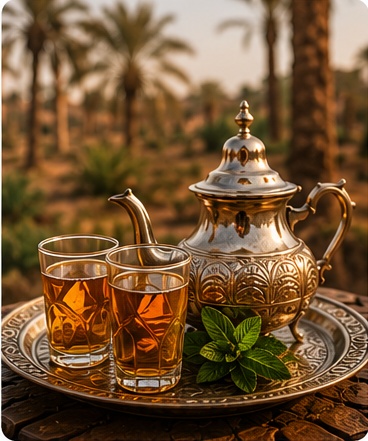
When Is Eid al-Fitr 2027 in Morocco?
Eid al-Fitr means “the festival of breaking the fast.” It falls on the first day of Shawwal, the month after Ramadan in the Islamic lunar calendar. Because the lunar year is about 11 days shorter than the solar year, Eid moves earlier every year.
Morocco does not simply follow Saudi Arabia. The Ministry of Habous and Islamic Affairs announces Eid only after its own committees sight the new crescent moon with the naked eye, usually on the evening of the 29th day of Ramadan. That is why Moroccan Eid sometimes falls one day after other countries.
| Year | Eid al-Fitr in Morocco | Status |
|---|---|---|
| 2025 | Monday, March 31 | Celebrated |
| 2026 | Friday, March 20 | Celebrated (official announcement by the Ministry of Habous) |
| 2027 | Wednesday, March 10 or Thursday, March 11 | Expected, to be confirmed by moon sighting |
When is Eid al-Fitr 2027 in Morocco? Eid al-Fitr 2027 is expected on Wednesday, March 10, 2027. Ramadan 1448 should begin around February 8 or 9, 2027, and Moroccans will watch for the Shawwal crescent on the evening of the 29th fasting day. If the moon is not seen, Ramadan completes 30 days and Eid moves to Thursday, March 11, 2027. The official date is announced by the Ministry of Habous the evening before, so keep one flexible day in your itinerary.
For reference, Morocco celebrated Eid al-Fitr 2026 on Friday, March 20, after 29 days of fasting, one day earlier than many astronomers predicted. That is a good reminder that the final word always comes from the moon sighting, not the calendar.
How Morocco Celebrates Eid al-Fitr: The Traditions, from Eve to Night
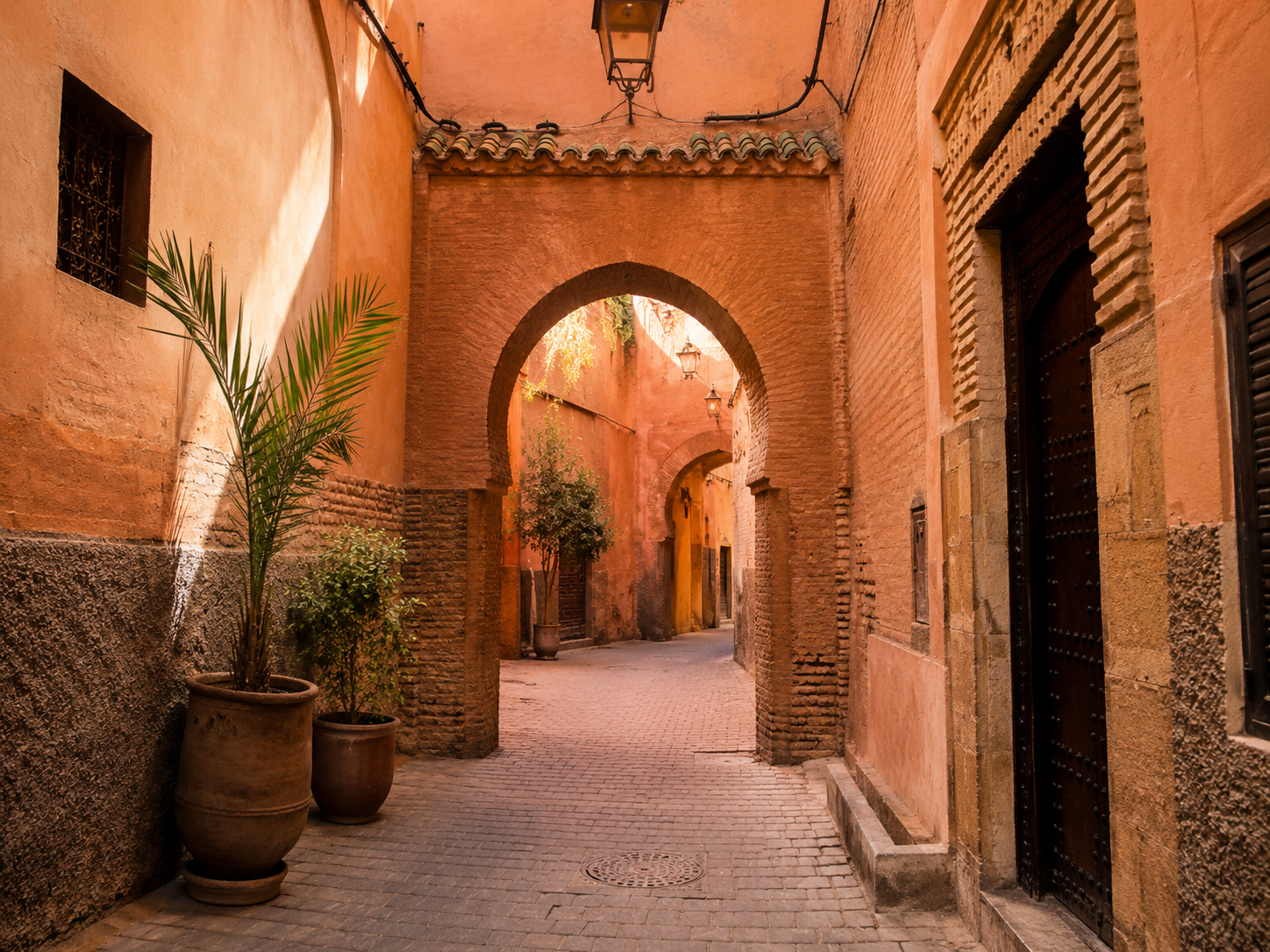
Ask a Moroccan “how do you celebrate Eid?” and you will hear the same rhythm in Marrakech, Fes or a small Atlas village. Here is how the day unfolds.
1. The last night of Ramadan: waiting for the moon
On the 29th evening, families gather around the TV after iftar to hear the official announcement. If the crescent is seen, phones light up with “Eid Mubarak” messages. Women start preparing dough late into the night, and barbers stay open past midnight for last-minute haircuts.
2. Zakat al-Fitr: making sure everyone celebrates
Before the Eid prayer, every Muslim household gives zakat al-fitr, a small obligatory charity for each family member. In Morocco it is usually paid in cash or in grain (wheat or barley) to neighbours in need. The idea is simple: no one should spend Eid hungry.
3. The Eid prayer at the msalla
In the early morning, men and many women walk to the msalla, an open-air prayer ground on the edge of town, or to the main mosque. The prayer is short, followed by a sermon. Afterwards, people hug, shake hands and repeat “Mbarek l’3id” (blessed Eid). The King of Morocco also leads the prayer in a mosque that is announced on national TV the day before.
4. Breakfast: the first daytime meal in a month
Back home, the table is already set. This first breakfast is a small celebration in itself, with tea, pastries and breads (see the food section below). It is customary to eat something sweet before the prayer, often a few dates, following the Prophet’s practice.
5. Family visits and “Eid money”
The rest of the day is for visits. Younger people visit elders first: parents, grandparents, aunts and uncles. Every house keeps a tray of tea and cookies ready for guests. Children receive coins or notes from relatives, called flouss l’3id, and spend them at the corner shop or the neighbourhood fair.
6. Reconciliation and remembering the dead
Eid is the day to make peace. Neighbours who argued during the year are expected to greet each other. In many families, people also visit the cemetery in the morning to pray for deceased relatives.
7. The evening: a quiet, full country
By evening, cafés reopen and families stroll in the main squares. In Marrakech, Jemaa el-Fna slowly comes back to life. Many shops stay closed for one to three days while workers travel to their home villages.
Eid al-Fitr Across Morocco: City and Village Traditions
The core rituals are the same everywhere, but each region adds its own flavour. Knowing these differences helps you choose where to spend Eid al-Fitr 2027.
Marrakech
In Marrakech, Eid morning is surprisingly calm. The great prayer gathers thousands near the Koutoubia and in the city’s msallas, then the medina empties as families stay home. In the afternoon, children in new clothes fill Jemaa el-Fna, and food stalls reopen one by one. By night, the square feels like a festival again.
Fes
Fes keeps some of the most traditional Eid customs in the country. Old Fassi families still prepare elaborate pastry trays days in advance, and visits follow a strict order: the eldest relatives first, then in-laws, then friends. Walking the medina on Eid afternoon, you will see whole families dressed in matching kaftans and djellabas.
The Atlas mountains and Amazigh villages
In Amazigh villages of the High Atlas, Eid is a community affair. Men pray together in the open air, then the whole village shares tea and bread. Families often prepare a simple dish together for neighbours. Hospitality here is spontaneous: a passing traveler is very likely to be invited in.
The Sahara and the south
Around Merzouga, Zagora and the oases, Eid brings scattered families back together. Nomadic and semi-nomadic families travel to their home villages, and evenings end with tea around the fire and sometimes traditional music. Desert camps stay open, so you can combine a Sahara night with a glimpse of southern Eid life.
Coastal cities
In Essaouira, Agadir and Tangier, Eid afternoons are for the seafront. After lunch, families walk along the corniche, children buy ice cream with their Eid money, and cafés by the ocean stay busy until late.
What Moroccans Eat and Wear on Eid al-Fitr
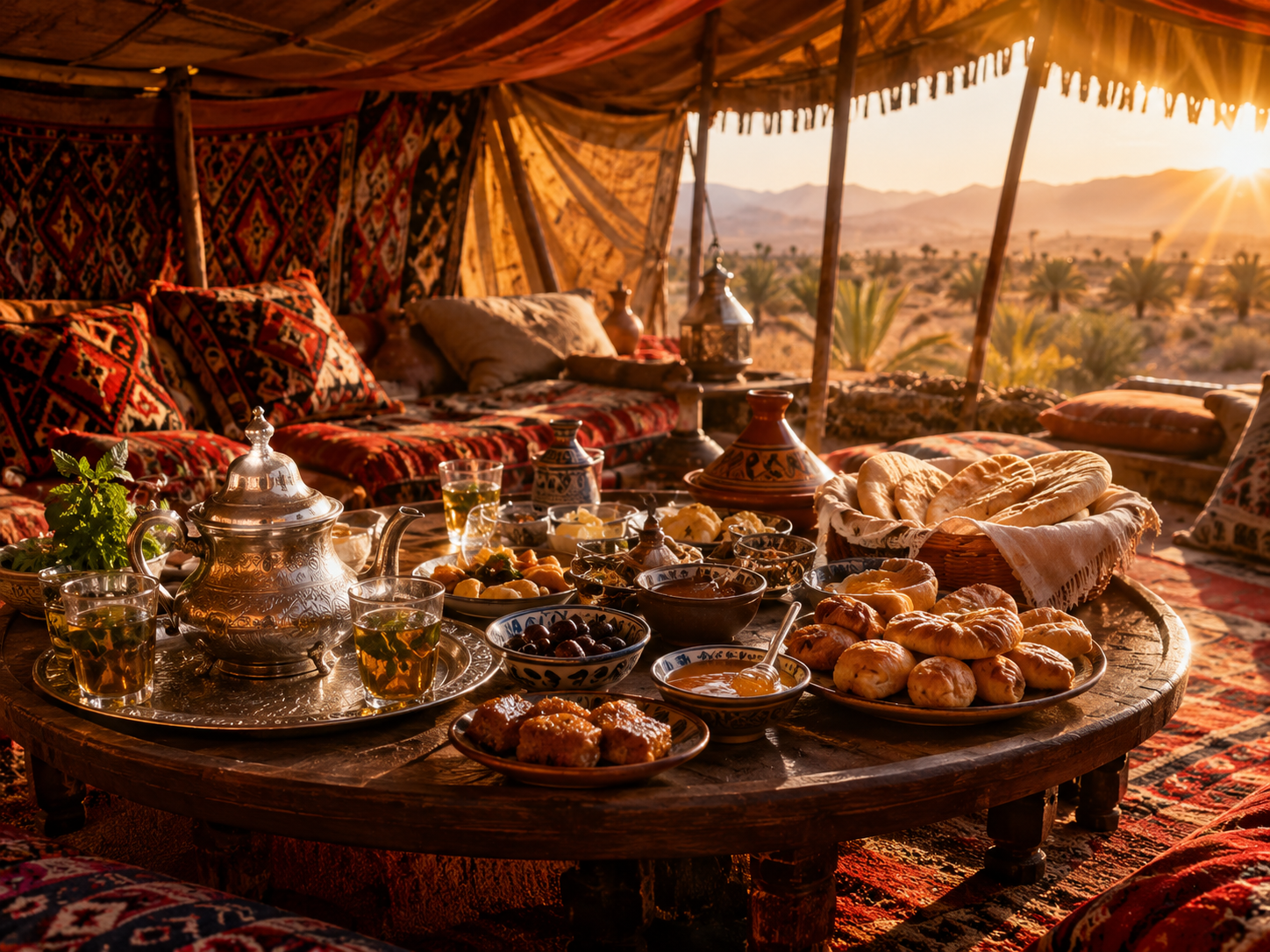
The Eid table
Unlike Eid al-Adha, Eid al-Fitr is not about meat. It is about pastries, bread and tea shared all day long.
| Dish | What it is | When it is served |
|---|---|---|
| Msemen and baghrir | Square flaky pancakes and “thousand-hole” semolina crêpes with honey and butter | Eid breakfast |
| Sellou (sfouf) | Roasted flour, almonds and sesame, served by the spoon | Breakfast and guest trays |
| Ghriba and fekkas | Crumbly almond cookies and twice-baked biscuits | All day, for visitors |
| Kaab el ghzal | Crescent-shaped almond-paste pastries | Special guests |
| Mint tea | Green tea with fresh mint and sugar | Every visit, without exception |
| Couscous or tagine | Family lunch, often chicken with preserved lemon and olives | Midday family meal |
Traditional clothes
New clothes are one of the strongest Eid al-Fitr traditions in Morocco. Children are dressed first, and they often sleep next to their new outfits the night before.
- Men and boys: a white or light-coloured djellaba or jabador, with yellow leather babouches and sometimes a red fez.
- Women and girls: a kaftan or takchita, often embroidered, worn with a belt and matching slippers.
- Everyone: freshly washed, perfumed, and dressed in their best, following the Prophet’s practice of looking clean and joyful on Eid.
What colors are appropriate to wear on Eid?
There is no religious rule on colour. In Morocco, white dominates for men at the morning prayer because it symbolizes purity. Women and children choose bright, celebratory colours: emerald green, gold, pink, sky blue. The only real rule is modesty: covered shoulders and knees, especially for the prayer and family visits.
What Is Forbidden During Eid al-Fitr? Etiquette for Visitors
In Islam, the clearest rule is that fasting on the day of Eid is forbidden. Eid is a day to eat, rest and celebrate, so even devout Moroccans who fast extra days during the year will never fast on Eid.
Beyond that, a few cultural habits matter, especially if you are a guest:
- Do not refuse tea or sweets outright. Accept at least a glass and one cookie; a polite “shukran, safi” (thank you, that’s enough) works after that.
- Do not skip greetings. Say “Eid Mubarak” or “Mbarek l’3id” to everyone, even strangers in your riad.
- Avoid quarrels and loud complaints. Eid is a day of forgiveness, and arguments are seen as bad luck for the year.
- Dress modestly. Shorts and sleeveless tops stand out more on Eid than on a normal day.
- Ask before photographing people, especially families at prayer grounds and women in traditional dress.
- Avoid drinking alcohol in public. It is always discouraged in Morocco, and on a religious holiday it is simply disrespectful.
As a traveler, you are not expected to know everything. A smile, a greeting and some curiosity are usually enough to be invited for tea.
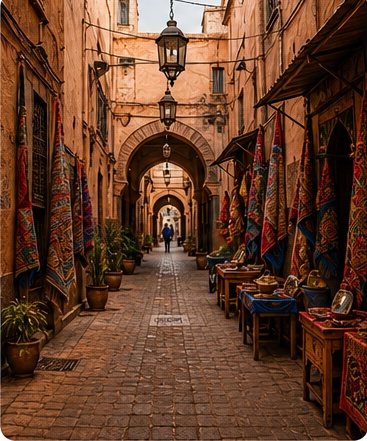
Traveling to Morocco During Eid al-Fitr
Visiting Morocco during Eid is one of the most authentic ways to see the country, as long as you plan for it.
What changes:
- Banks, administrations and many souk shops close for one to two days, sometimes longer in small towns.
- Buses, trains and grand taxis are packed the days before and after Eid as people travel home. Book transport early.
- Hotels, riads and desert camps stay open, and tours usually run normally.
What you gain:
- You see Moroccan family life up close: new clothes in the streets, tea trays at every door, a festive and relaxed atmosphere.
- Medinas are calmer in the morning, which is ideal for photography.
- Many guests are invited to share Eid breakfast or lunch with their hosts. Say yes.
Our tip: Spend Eid in a city like Marrakech or Fes to feel the celebrations, then head to the Sahara the next day, when roads are quieter. Plan your transport and accommodation before Ramadan ends.
MarrakeX is your digital guide to real Morocco. Before you travel for Eid 2027, explore our Morocco experience guides, from the Fes medina to the Sahara, to plan each day around local life. Have a question about your dates? Get in touch and we will point you in the right direction.
Final Thoughts: Eid al-Fitr Is Morocco at Its Most Generous
Eid al-Fitr traditions in Morocco are not a show for visitors. They are the private joy of millions of families, opened up for one day to anyone who knocks on the door. The dawn prayer, the first breakfast after a month of fasting, the children counting their Eid money, the endless glasses of mint tea: these moments explain Moroccan culture better than any monument.
If your trip falls around March 10, 2027, do not avoid Eid. Plan around it. Book your transport early, keep a flexible day for the moon sighting, dress modestly, learn to say “Mbarek l’3id”, and accept every glass of tea you are offered. You will leave with something more than photos.
Are you planning to be in Morocco for Eid al-Fitr 2027, or have you already celebrated it here? Share your questions, plans or memories in the comments below. We would love to hear from you.
FAQ: Eid al-Fitr Traditions in Morocco
When is Eid al-Fitr 2027 in Morocco?
Eid al-Fitr 2027 is expected on Wednesday, March 10, 2027, or Thursday, March 11 if Ramadan lasts 30 days. Morocco confirms the date by moon sighting the evening before.
How does Morocco celebrate Eid al-Fitr?
With zakat al-fitr, the morning prayer at the msalla, a breakfast of msemen and mint tea, new djellabas and kaftans, family visits, and Eid money for children.
What do Muslims usually do during Eid?
They give charity, pray the Eid prayer, wear their best clothes, eat with family, visit relatives and neighbours, forgive old quarrels and pray for deceased loved ones.
How do we celebrate Eid al-Fitr in Morocco?
Moroccans pay zakat al-fitr, attend the morning Eid prayer, share a festive breakfast, wear new traditional clothes, visit relatives and give money to children.
What food is eaten on Eid?
Something sweet first, often dates. In Morocco, breakfast includes msemen, baghrir, sellou, cookies and mint tea, followed by a family lunch of couscous or tagine.
What is forbidden during Eid al-Fitr?
Fasting on the day of Eid is forbidden in Islam. Culturally, Moroccans also avoid arguments, ignoring greetings and refusing hospitality.
What colors are appropriate to wear on Eid?
Any clean, modest outfit works. White is traditional for men at prayer; women and children wear bright colours like green, gold and pink.
What does "Eid Sghir" mean?
It means “the small Eid,” the Moroccan name for Eid al-Fitr, as opposed to Eid Kbir (Eid al-Adha).
How long is the Eid al-Fitr holiday in Morocco?
Officially one to two days, but many shops close for up to three days while families travel.
Is it a good time to visit Morocco?
Yes. Tours, riads and desert camps operate normally, and you experience the country at its most welcoming. Just book transport early.
What do you give as an Eid gift?
In Morocco, the classic gift is money for children, called flouss l’3id. Adults bring trays of homemade cookies, new clothes for close family, perfume, or a box of dates when visiting.
How to wish someone a happy Eid?
Say “Eid Mubarak” (blessed Eid). In Moroccan Darija, people say “Mbarek l’3id” or “3id mbarek said”, and the usual reply is “Allah ybarek fik” (may God bless you too). “Kul 3am wa antum bikhair” (may every year find you well) is also common.
Are Muslims allowed to shower during Ramadan?
Yes. Showering does not break the fast. Fasting people simply avoid swallowing water. On Eid morning, a full wash (ghusl) before the prayer is even recommended.
Who are the three people Allah will not accept?
This question usually refers to a well-known hadith in Sahih Muslim: on the Day of Judgment, Allah will not speak to or look at three people: the one who drags his garment out of arrogance, the one who reminds others of his favours, and the one who sells goods with a false oath. It is a reminder of humility and honesty, values that Eid also celebrates.
Is it haram to say "OMG"?
Most scholars see no harm in sincerely calling on God, but many Muslims prefer Islamic expressions such as “SubhanAllah” or “Ya Allah”, and avoid using God’s name carelessly or as a joke.
For detailed religious rulings, ask a local imam or a trusted scholar; Moroccan practice follows the Maliki school.