Ramadan Food in Morocco: What Moroccans Eat at Ftour (2027 Guide)
FTOUR TIME
STAR DISH
STAR SWEET
RAMADAN 2027
What Is Ftour in Morocco?
Every evening during Ramadan, a few minutes before sunset, Moroccan streets go quiet. Families gather around a table covered with steaming soup, honey cookies, dates, eggs, pancakes and glasses of milk and juice. When the call to prayer for Maghrib sounds, the fast is over, and ftour begins.
Ftour (from the Arabic futur, the meal that breaks the fast) is the Moroccan name for iftar. It is the most anticipated moment of the day, and the food on the table is very different from what Moroccans eat the rest of the year. Some dishes, like harira and chebakia, are so linked to the holy month that many families only make them for Ramadan.
In this guide, we explain what Moroccans eat during Ramadan, in what order, what changes at night and at s’hour, and how you can taste a real Moroccan ftour if you visit during Ramadan 2027.
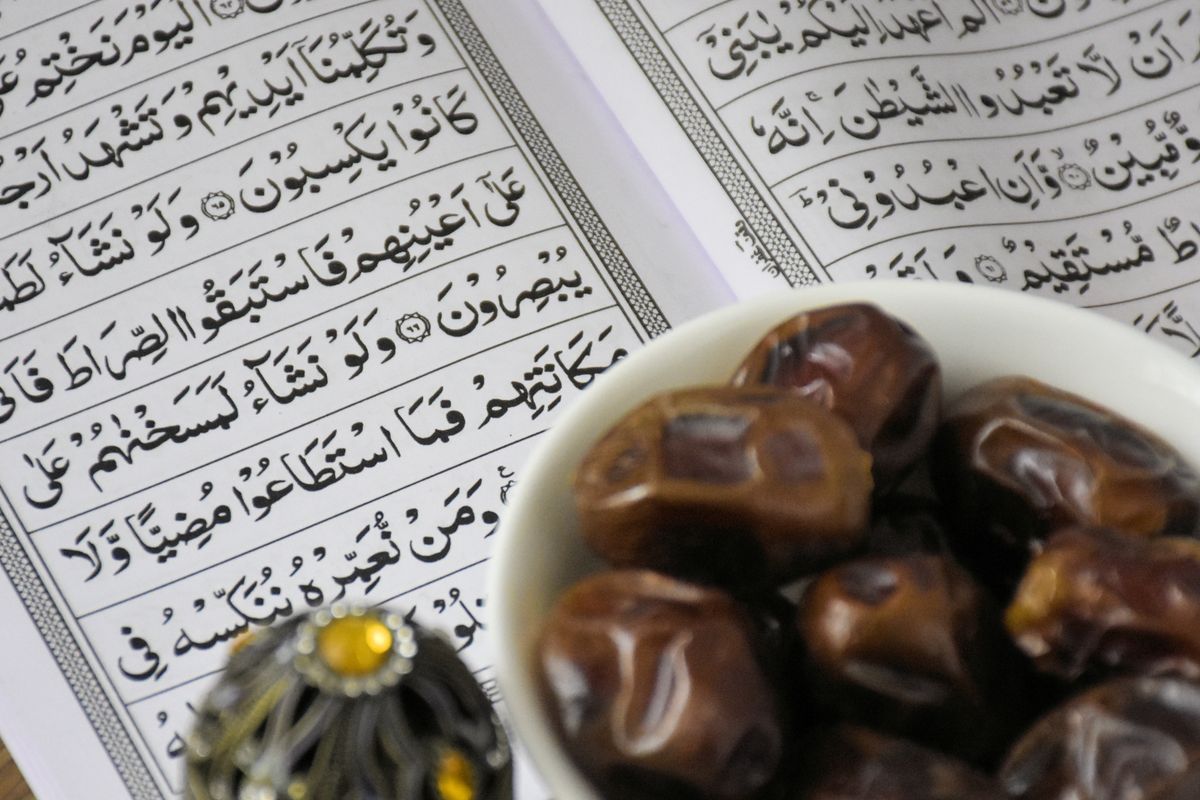
How Moroccans Break the Fast: The Order of the Evening
A Ramadan evening in Morocco follows a gentle rhythm. Most families start light, then move on to the soup and the rest of the spread:
- Water, milk and dates. Many families break the fast with a few sips of water or milk and a date, following the tradition of the Prophet.
- Prayer. Some people pray Maghrib right after the dates, then come back to the table.
- Harira and the spread. A bowl of harira comes first, followed by eggs, breads, pancakes and sweets.
- Mint tea or coffee. Tea and coffee close the ftour, often in front of the special Ramadan TV programs.
Ftour is only the first meal of the night. Here is how eating is organized during Ramadan in Morocco:
| Meal | When | What is typically served |
|---|---|---|
| Ftour | At sunset, at the Maghrib call to prayer | Dates, milk, harira, eggs, msemen, baghrir, chebakia, sellou, juice, tea |
| Dinner (ash’a) | Later in the evening, for some families | Tagine, fish or a lighter home-cooked dish |
| S’hour | Before dawn, before the Fajr call to prayer | Msemen or baghrir, eggs, yogurt, milk, dates, tea |
The Essential Ramadan Foods in Morocco
Every family has its own habits, but these foods appear on almost every ftour table in the country:
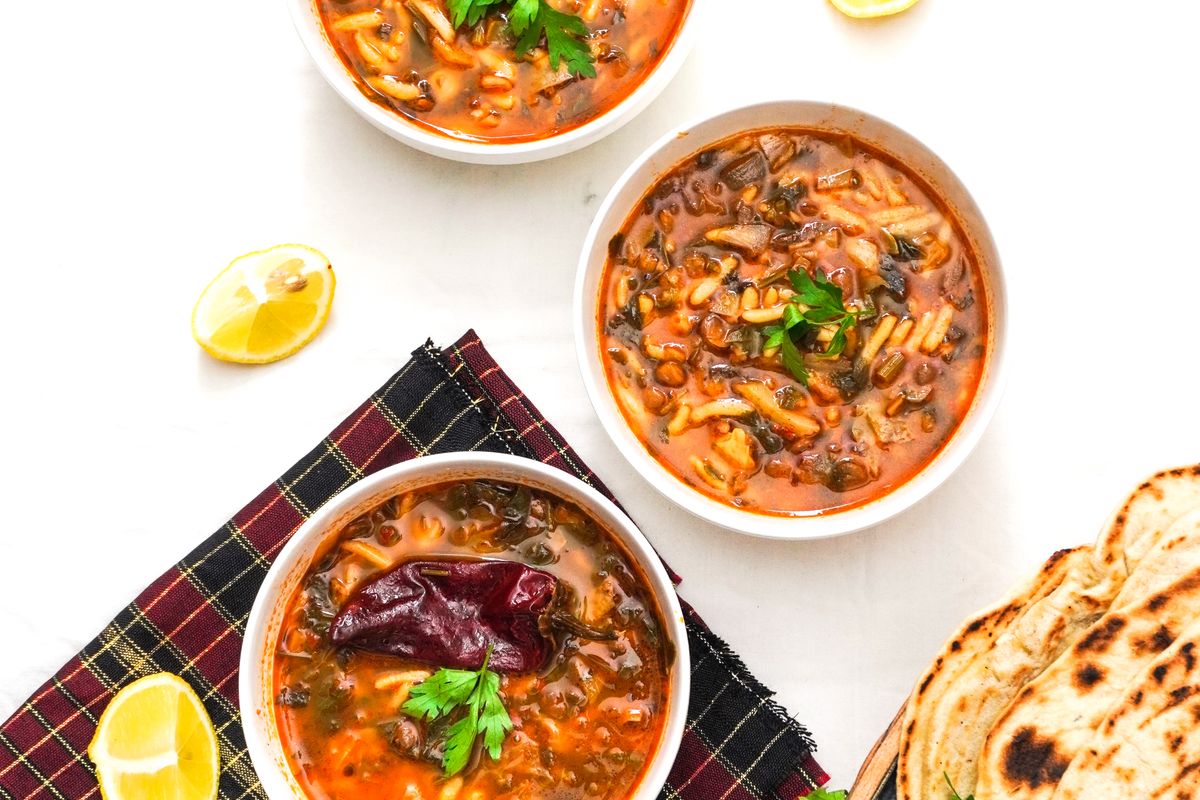
Harira
The signature soup of Ramadan. Harira is a tomato-based soup with lentils, chickpeas, fresh herbs and spices, sometimes with small pieces of meat. It is thickened at the end and often served with a lemon wedge and dates. Few Moroccans would call it a ftour without harira.
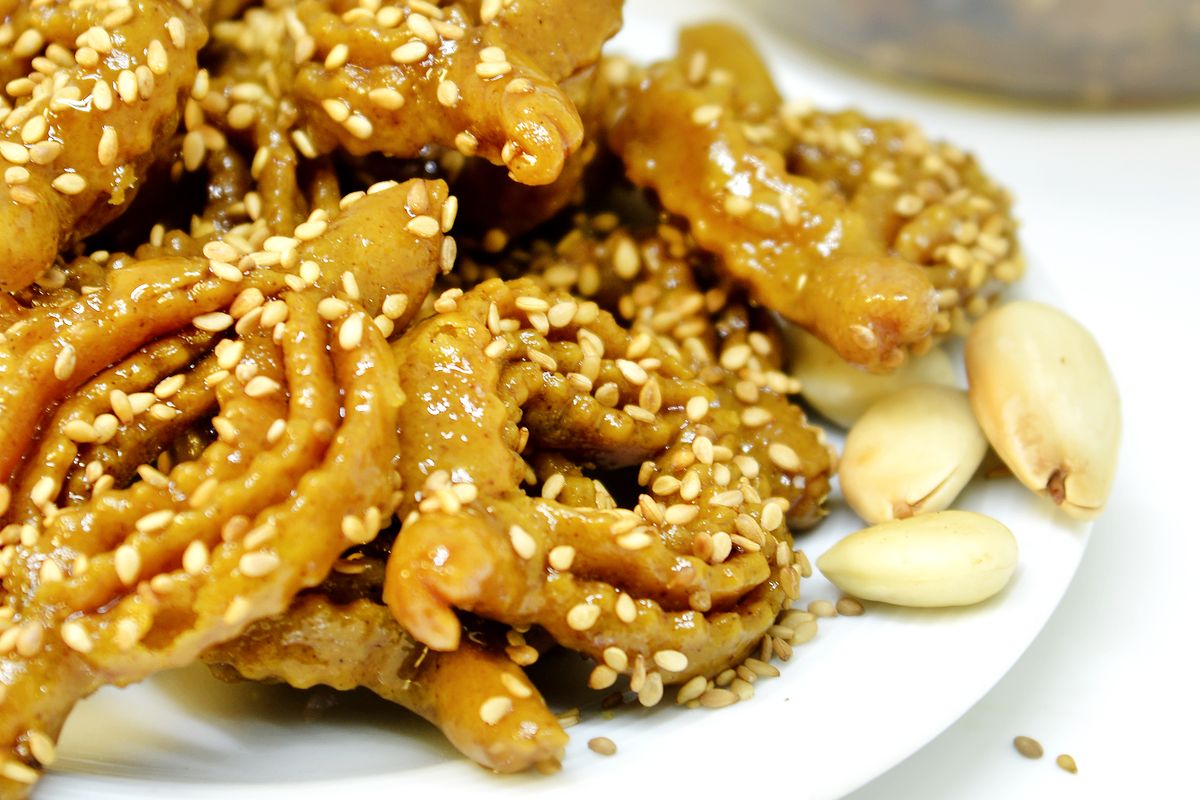
Chebakia
The most famous Ramadan sweet: strips of dough folded into a flower shape, fried, soaked in honey and covered in sesame seeds. Families often prepare large batches before the month starts, and you will see piles of chebakia in every medina.
Dates and milk
Dates are the first thing many Moroccans eat at sunset, often with a glass of milk or water. During Ramadan, the markets fill with dates of all sizes, and some families serve them stuffed with almond paste.
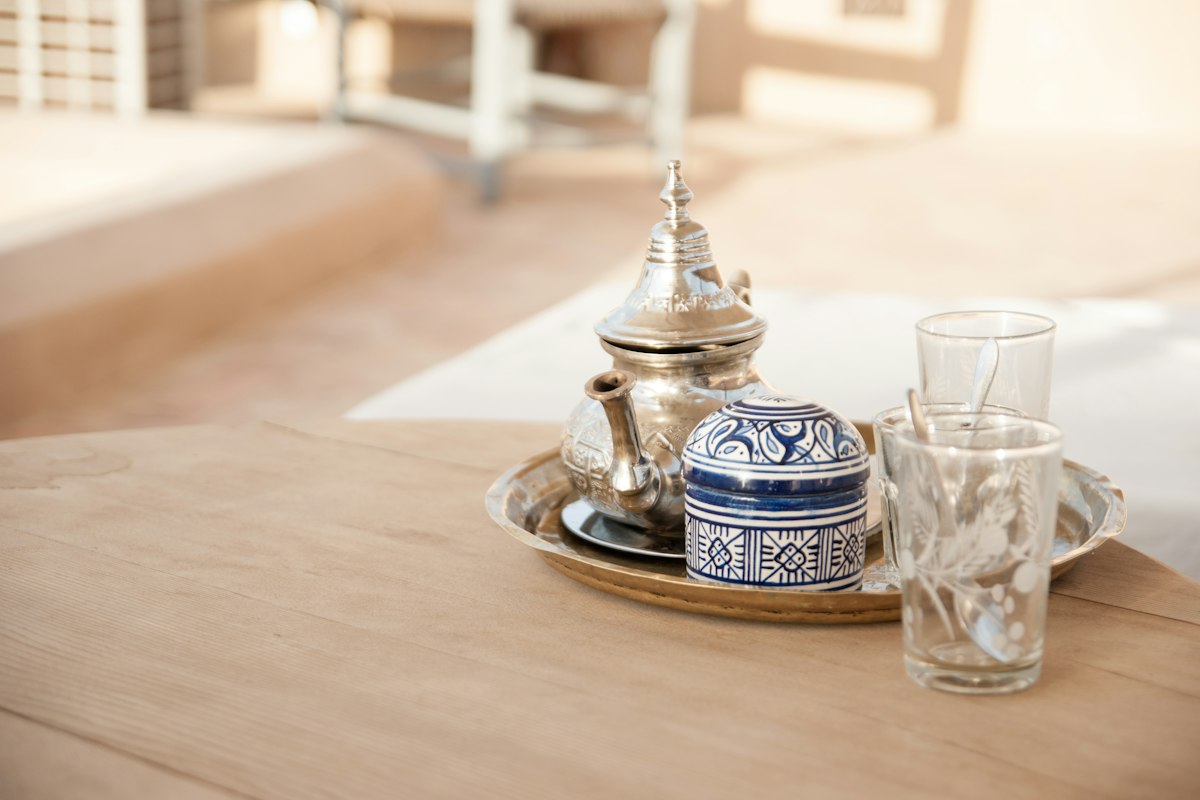
Mint tea and coffee
Moroccan mint tea is never far away. At ftour it is served with msemen, baghrir and sweets, and many families also drink coffee with milk to get through the late evening.
More dishes you will see on a Moroccan ftour table
| Food | Sweet or savory | What it is |
|---|---|---|
| Sellou (sfouf) | Sweet | A rich, crumbly mix of toasted flour, fried almonds, sesame seeds, butter and spices, eaten by the spoonful |
| Hard-boiled eggs | Savory | Peeled and dipped in salt and ground cumin, a simple ftour classic |
| Msemen | Both | Square, flaky pan-fried flatbread, served with honey and butter or with olive oil |
| Baghrir | Sweet | Spongy semolina pancakes full of little holes, eaten with melted butter and honey |
| Briouats | Both | Crispy triangles of thin pastry filled with meat, cheese or almonds and honey |
| Batbout and krachel | Both | Soft pan-cooked bread and sweet sesame brioche rolls |
| Fresh juices | Sweet | Orange juice and avocado smoothies are favorites in many homes |
| Fekkas | Sweet | Crunchy, twice-baked biscuits with almonds and raisins, perfect with tea |
What Do Moroccans Eat After Ftour and at S’hour?
After ftour, many people go to the mosque for the night prayers, called Taraweeh, or head to a café with friends. Streets that were empty at sunset become busy until late at night.
Some families eat a later dinner during the evening, such as a tagine or fish. Others skip it and go straight to s’hour, the last meal before dawn. S’hour is usually simple and filling: msemen or baghrir, eggs, yogurt, milk, dates and tea, so people can get through the next day of fasting.
In some neighborhoods, a traditional drummer called the neffar still walks the streets before dawn to wake people up for s’hour, although the tradition is slowly disappearing.
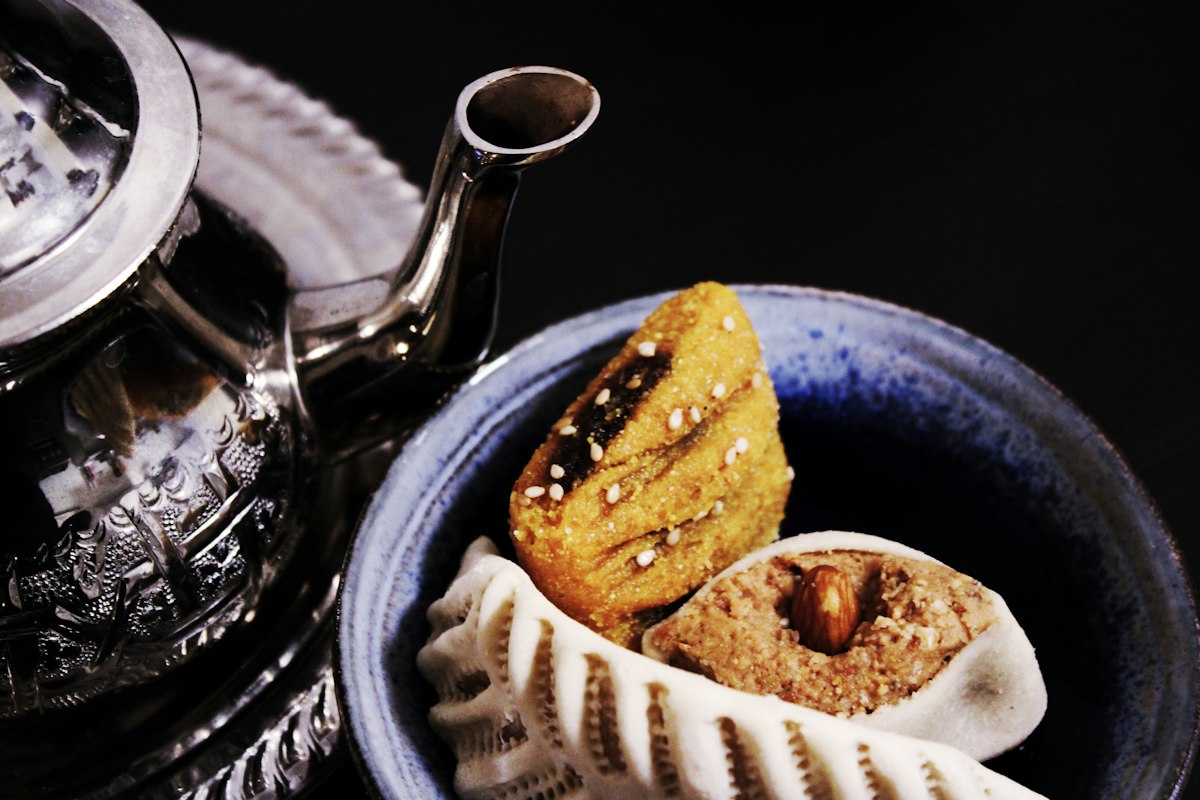
Regional Ramadan Food Traditions
Morocco’s ftour changes slightly from one city to another. In Fes, harira is considered essential, served with krachel, msemen with khlii (preserved dried meat), chebakia and sellou. In Meknes, families are known for rghaif, a flaky flatbread, stuffed with khlii or meat. Coastal cities often add fried fish to the evening meal, while in the south you may find more dates, local breads and amlou, a spread of almonds, argan oil and honey.
Whatever the city, the spirit is the same: a generous table, shared with family, neighbors and guests.
Where Can Travelers Try a Moroccan Ftour?
You do not need to be invited into a Moroccan home to taste a real ftour. Here are the easiest options:
- Your riad or hotel. Many riads serve a ftour menu at sunset for guests, often with harira, dates, chebakia, eggs and pancakes. Ask the day before.
- Restaurants in the medina. In Marrakech and Fes, many restaurants offer a set ftour menu during Ramadan. Book ahead, as tables fill up just before sunset.
- Street stalls and food markets. In the last hour before sunset, stalls sell harira, chebakia, msemen and baghrir to take away. It is one of the best ways to feel the Ramadan atmosphere.
- A shared ftour. If a Moroccan family or guide invites you, say yes. Sharing ftour with locals is one of the most memorable experiences of a Ramadan trip.
Ftour etiquette for visitors
- Wait for the call to prayer before you start eating, even if the food is already on the table.
- Start with a date and a sip of water or milk, like your hosts.
- Try a little of everything, and do not worry about finishing it all.
- Avoid eating or drinking in public during the day, and keep snacks for your room or a restaurant.
- Wish your hosts “Ramadan Mubarak”, which they will appreciate.
Traveling to Morocco during Ramadan 2027?
Find out what is open, how days change and how to plan your trip in our complete guide, then read how Moroccans celebrate the end of the month in our guide to Eid al-Fitr traditions.
A Table Worth Waiting For
Ramadan food in Morocco is about much more than breaking a fast. It is the smell of harira in the late afternoon, the honey on a plate of chebakia, the first date at sunset and the long, warm evenings that follow. If you travel to Morocco during Ramadan 2027, plan at least one ftour. It is the easiest way to understand what this month means to Moroccans.
Have you tasted a Moroccan ftour, or do you have a favorite Ramadan dish? Share it in the comments below. We would love to hear from you and help you plan your trip!
FAQ: Ramadan Food in Morocco
What do Moroccans eat during Ramadan?
At ftour, most families eat dates, milk, harira soup, hard-boiled eggs, msemen, baghrir, chebakia, sellou and juice, followed by mint tea or coffee. Some eat a later dinner, and everyone eats s’hour before dawn.
What is ftour in Morocco?
Ftour is the Moroccan name for iftar, the meal that breaks the fast at sunset, when the Maghrib call to prayer is heard.
What is the traditional soup of Ramadan in Morocco?
Harira, a tomato-based soup with lentils, chickpeas, herbs and spices, sometimes with meat. It is the centerpiece of the Moroccan ftour.
What is chebakia?
A flower-shaped cookie made from fried dough, soaked in honey and covered with sesame seeds. It is the most popular Ramadan sweet in Morocco.
What is sellou?
Sellou, also called sfouf, is a sweet mix of toasted flour, almonds, sesame seeds, butter and spices, eaten in small spoonfuls during Ramadan.
What do Moroccans eat for s’hour?
S’hour is usually simple: msemen or baghrir, eggs, yogurt, milk, dates and tea, eaten before the dawn prayer.
Can tourists eat ftour in Morocco?
Yes. Many riads, hotels and restaurants serve ftour menus during Ramadan, and visitors are warmly welcome to join.
When is Ramadan 2027 in Morocco?
Ramadan 2027 is expected to start around 8 February 2027 and end around 9 or 10 March, depending on the moon sighting.